
Spring 2026 Newsletter Spotlight Article
The Closed Landfills Are Still Breathing. Here is What We Do About It.
A Local Answer to a Long-Term Problem: Methane Meets Microbes
By Dr. Sehrish Asghar, Environmental Scientist, HVRC Mid-Hudson Landfill Biofilters Project | March 2026
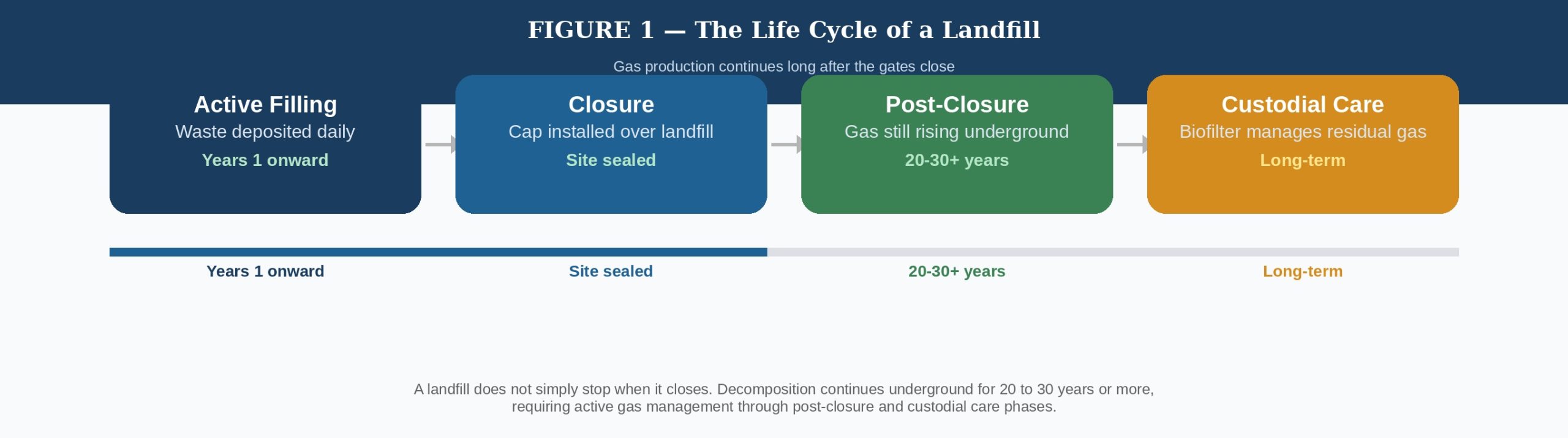
Why a Closed Landfill Is Not Really “Closed”
Imagine you finish baking a loaf of bread and turn the oven off. The bread keeps cooking for a while because the heat does not vanish the moment you flip the switch. A closed landfill works the same way.
When a landfill fills up and officially shuts down, workers build a carefully engineered lid over the top: layers of soil, clay, and special plastic sheets. Grass gets planted. Signs go up. From the outside, it looks peaceful, even park-like.
But six feet underground, nothing has stopped. Food scraps, yard clippings, paper, and other organic materials are still slowly rotting. It happens exactly the way decomposition works in a compost pile, just much more slowly and without oxygen. When organic material breaks down without oxygen, it produces gas. That gas keeps coming for 20 to 30 years after the last truck drops off its load, sometimes longer.
Think of it like a sourdough starter. Even when you put it in the fridge and ignore it, the bacteria inside keep slowly working away, producing bubbles and gas. A closed landfill is a giant version of the same idea. The biology does not care that the kitchen is closed.
What Is Methane, and Why Does It Matter?
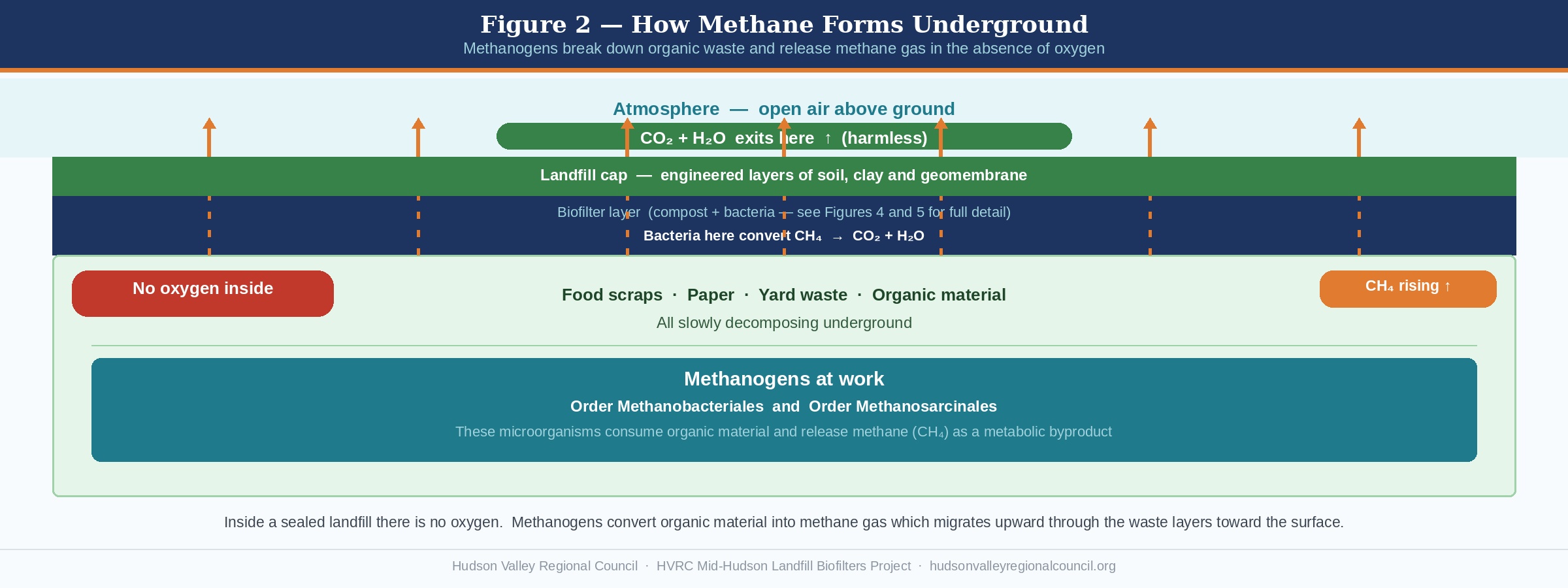
Methane is a gas. You cannot see it; you cannot smell it on its own, and it is the same gas that heats many of our homes and cooks our food when we turn on the stove. Deep in a landfill, bacteria called methanogens, organisms in the family Methanobacteriales and Methanosarcinales — produce it as a natural byproduct of digesting organic waste. It is no different from how your digestive system produces gas after a meal.
The challenge is not that methane is exotic or mysterious. The challenge is that when it seeps out of a closed landfill unchecked, it can build up under parking lots, inside nearby buildings, or along utility trenches and create a real safety hazard. It is also simply wasted potential. Methane is fuel, yet in these old, closed landfills it’s a nuisance venting into the air. But letting it drift away unmanaged means squandering something bacteria could fix—transforming a problem into benign byproducts.
How does methane form underground? When food scraps, paper, and yard waste rot in a sealed, airless environment like the inside of a packed landfill, methanogens produce methane as their waste product. It is the same process that happens in a swamp, at the bottom of a lake, or in the stomach of a cow. The landfill is simply a very large, very well-sealed version of those environments.
- More information on methanogens: Methanogens – an overview | ScienceDirect Topics
- More information on landfill gas composition : EPA — Landfill Gas Basics
The Old Solution and Why It Eventually Runs Out
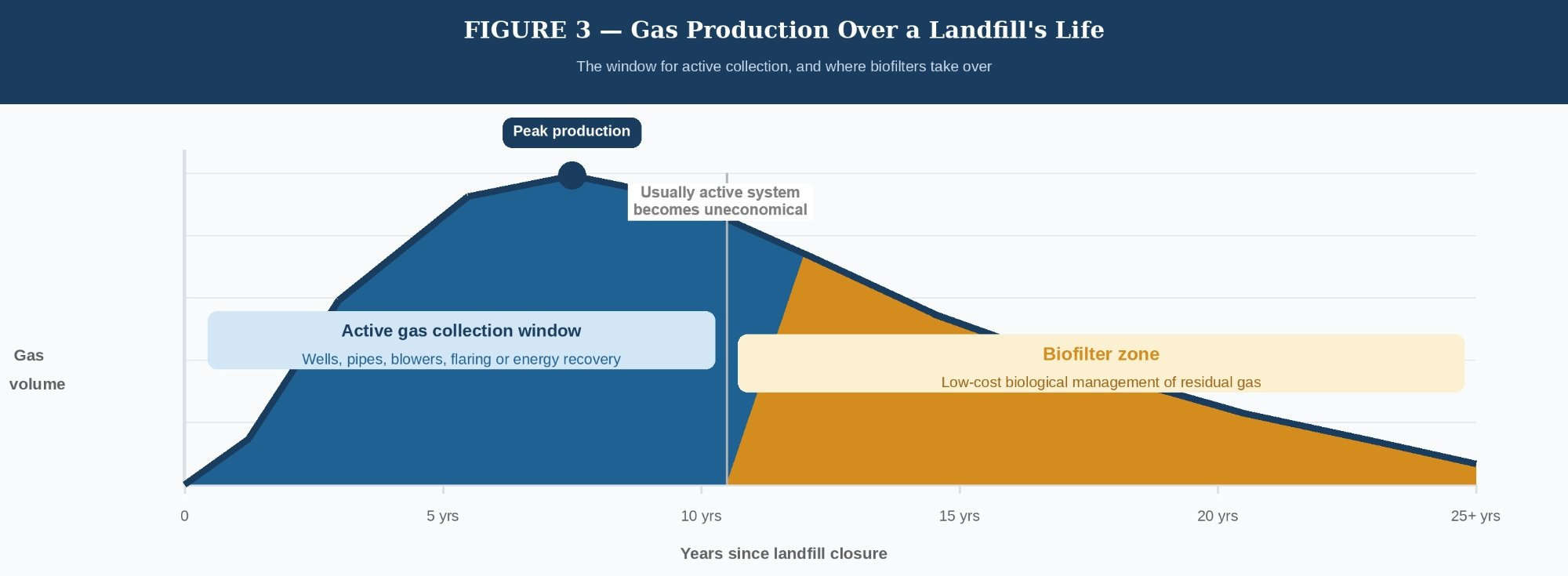
While a landfill is active and in its early years after closure, there is enough gas being produced to make it worthwhile to drill wells into the waste, connect them to pipes, and actively suck the gas out. That gas is either burned off in a process called flaring or used to generate electricity through a landfill gas-to-energy (LFGTE) system.
It is a good system while it lasts. But gas production peaks and then slowly declines over many years. The active collection equipment, including all those wells, pipes, blowers, and monitoring systems, is expensive to build and maintain. As gas levels drop, you eventually reach a point where you are spending more money running the system than the gas is worth.
Think of it like a car running out of fuel. In the early years, the tank is full and the engine runs great. Over time, the fuel level drops. At some point, the cost of keeping the engine maintained is higher than what you are getting out of it. You need a different approach for the long tail.
And yet the gas does not stop. It keeps seeping upward at a lower rate, possibly for another 30-40 years. That is the gap that biofilters are designed to fill.
- More information on active landfill gas collection: EPA LMOP — Gas Collection Systems
So What Is a Biofilter?
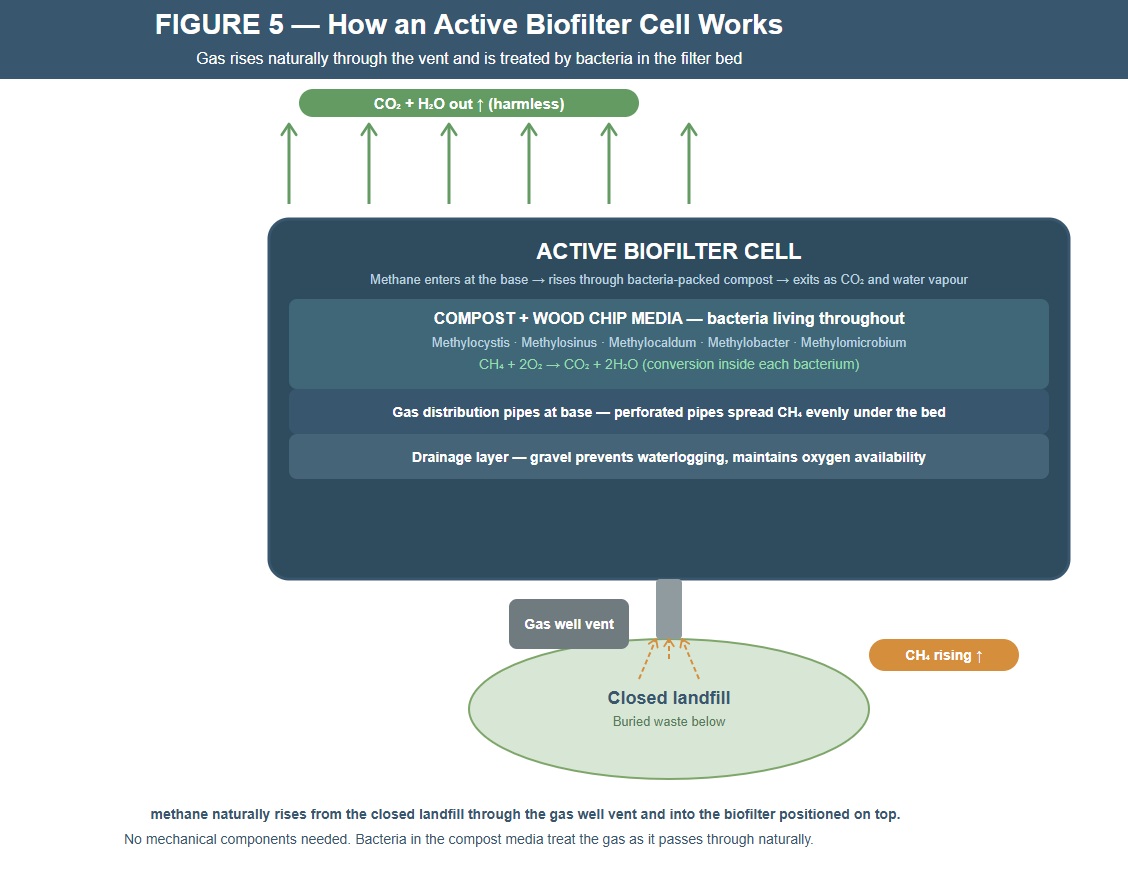
A biofilter is a bed of compost, the same material you might put in your garden, that is specially engineered and placed so that landfill gas passes through it before reaching the open air.
Inside that compost, billions of naturally occurring bacteria eat the methane as it passes through. By the time the gas exits the other side of the filter, most of the methane has been converted into carbon dioxide and water vapor, both of which are far less problematic than methane. No burning. No machinery. No fuel. Just biology.
Think of it exactly like the filter in a fish tank. A fish tank filter is not just a screen that catches debris. The real work is done by beneficial bacteria living inside the filter material. Those bacteria convert harmful ammonia from fish waste into harmless nitrates. A biofilter does the same job for methane: bacteria living in compost convert a harmful gas into harmless ones. The compost is simply the hotel where the bacteria live and work.
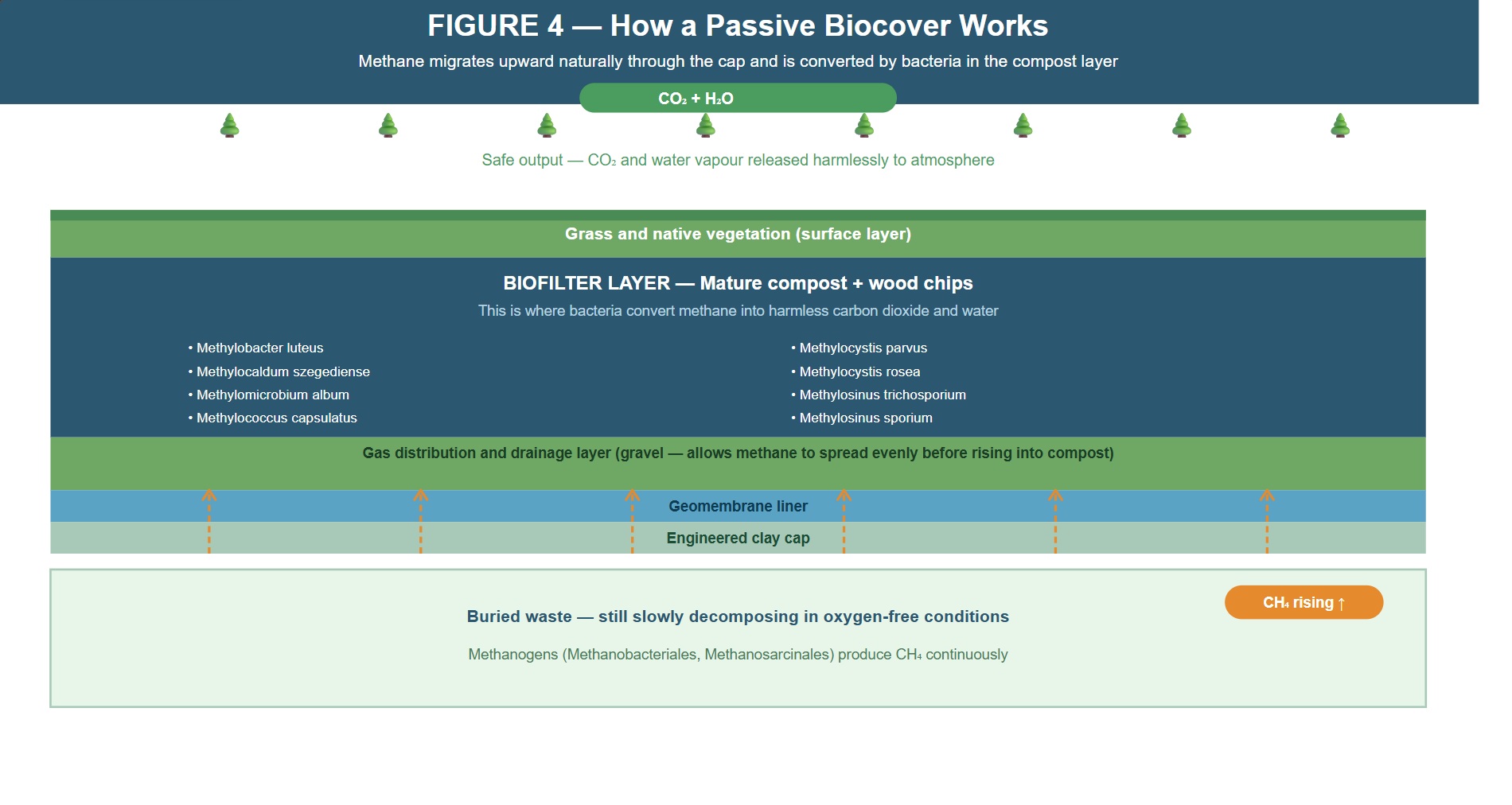
A biofilter can be built in two ways. The simpler approach is to build the compost layer directly into the landfill’s final cap, so all methane naturally passes through it on the way up. This is called a biocover. The more controlled approach is a separate above-ground bed that gas is piped into and pushed through using a small low-pressure blower. This is called an active biofilter. The right choice depends on how much gas the site is producing, what the terrain looks like, and what existing infrastructure is in place.
- More information on biofilter and biocover design: EPA — Apply Biofilters or Biocovers
Meet the Bacteria. These Are the Tiny Heroes.
The star of this entire story is a group of bacteria called methanotrophs, literally meaning methane eaters. They consume methane as their primary food source and in return produce carbon dioxide and water, both harmless in the quantities generated here.
You do not need to buy these bacteria, create them in a lab, or add them artificially. They already exist in soil and in good compost, everywhere in the world. They have been there for millions of years, quietly doing this job anywhere methane and oxygen happen to meet. What a biofilter does is simply give them a comfortable home and the ideal conditions to do what they already do naturally, just much faster and more efficiently.
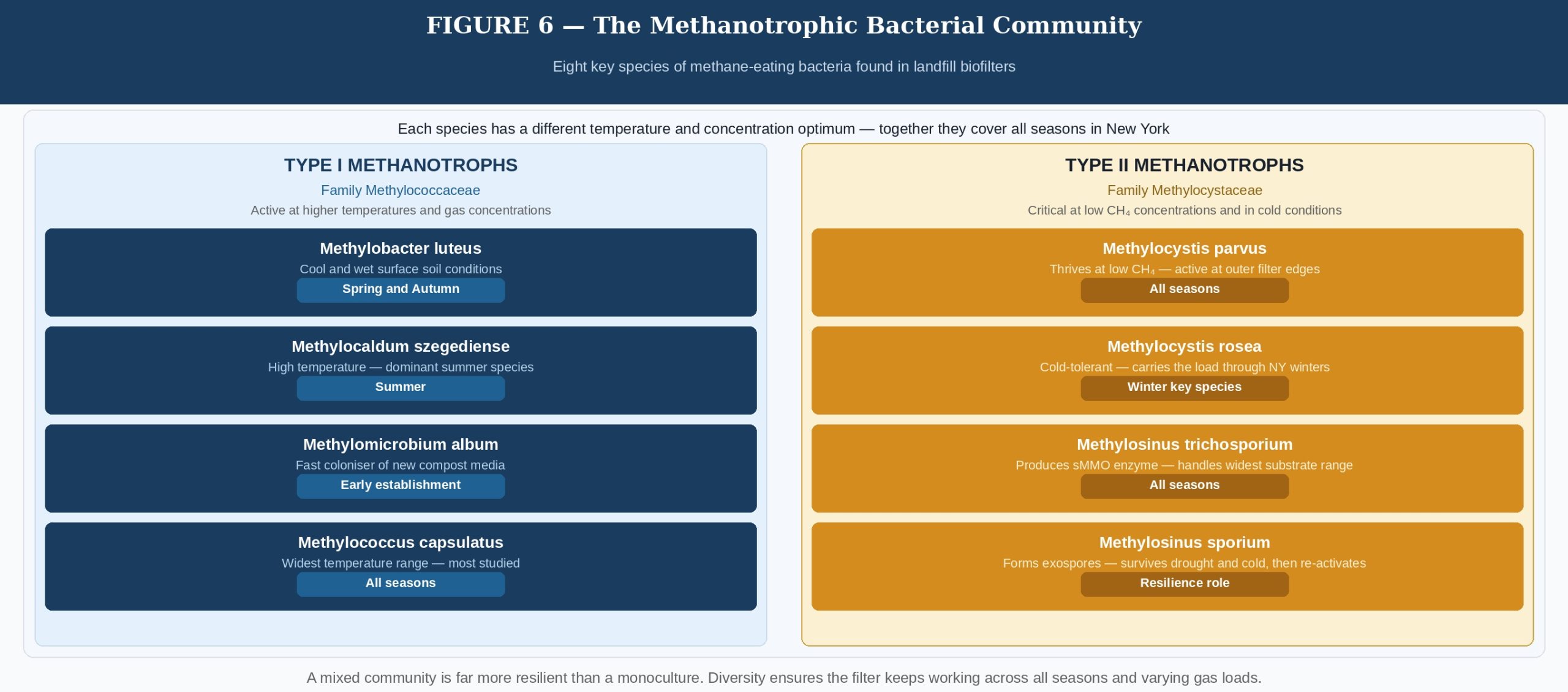
The species doing the work. A well-functioning biofilter contains not one but an entire community of methanotrophic bacteria. The main species found in landfill biofilters include:
Type I methanotrophs (family Methylococcaceae):
- Methylobacter luteus — thrives in cool, wet conditions common in surface soils
- Methylocaldum szegediense — active at higher temperatures, important in summer months
- Methylomicrobium album — fast-growing and robust, one of the first to colonize new filter media
- Methylococcus capsulatus — one of the most studied and reliable methane oxidizers, effective across a wide temperature range
Type II methanotrophs (family Methylocystaceae):
- Methylocystis parvus — highly adaptable, survives low methane concentrations, critical in the outer edges of a filter where gas is diluted
- Methylocystis rosea — cold-tolerant strain, particularly important for maintaining performance through New York winters
- Methylosinus trichosporium — produces a powerful enzyme form called sMMO (soluble methane monooxygenase) that handles a wide range of conditions
- Methylosinus sporium — forms resting cells called exospores that allow it to survive dry or cold periods and reactivate when conditions improve
Each of these species has a slightly different temperature optimum, moisture preference, and gas concentration tolerance. Together they cover the full operating range of the filter across seasons. When winter slows Methylobacter, the cold-tolerant Methylocystis rosea and Methylocystis parvus continue oxidizing methane at reduced but meaningful rates. When summer heats the bed, Methylocaldum and Methylococcus accelerate. The community self-regulates based on environmental cues.
Think of a mixed forest versus a single-crop plantation. A plantation of one tree species is vulnerable because one disease or one drought can wipe it out. A diverse forest survives because when conditions get rough for one species, others pick up the slack. The same is true here. When one bacterial species slows, another takes over. The result is a system that keeps working across seasons and weather changes.
This is one of the main reasons well-matured composts make the best biofilter material. It comes pre-loaded with a diverse, thriving community of these bacteria, rather than a thin, newly established one.
What do the bacteria actually do to methane at the molecular level? Each methane molecule is made of one carbon atom and four hydrogen atoms. The bacteria latch onto it using an enzyme called methane monooxygenase (MMO) and combine it with oxygen, essentially burning it at room temperature inside their tiny bodies:
CH₄ + 2O₂ → CO₂ + 2H₂O
One methane molecule goes in. One carbon dioxide molecule and two water molecules come out. Carbon dioxide is the same gas you breathe out. Water vapor is water. The bacteria extract energy from this reaction and that is how they feed and multiply. No flames. No reactor. No electricity. Just a chemical reaction that bacteria have been running for hundreds of millions of years.
MMO comes in two forms. The particulate form (pMMO), which is membrane-bound, is the dominant enzyme in most landfill conditions and is expressed when there is sufficient copper in the media. The soluble form (sMMO), produced mainly by Methylosinus trichosporium, activates under low-copper conditions and handles a broader range of substrates. This is one reason why the mineral content of the compost media is worth checking during the design phase.
- More information on methanotrophic bacteria: ScienceDirect — Methanotroph overview
- More information on methane monooxygenase: MMO enzyme review
How Engineers Keep the Bacteria Happy
Bacteria are reliable workers, but only if their environment is right. Too dry and they slow down. Too wet and they cannot breathe. Too cold and they go dormant. The job of the engineer is to design a system that keeps conditions in the right zone through all seasons.
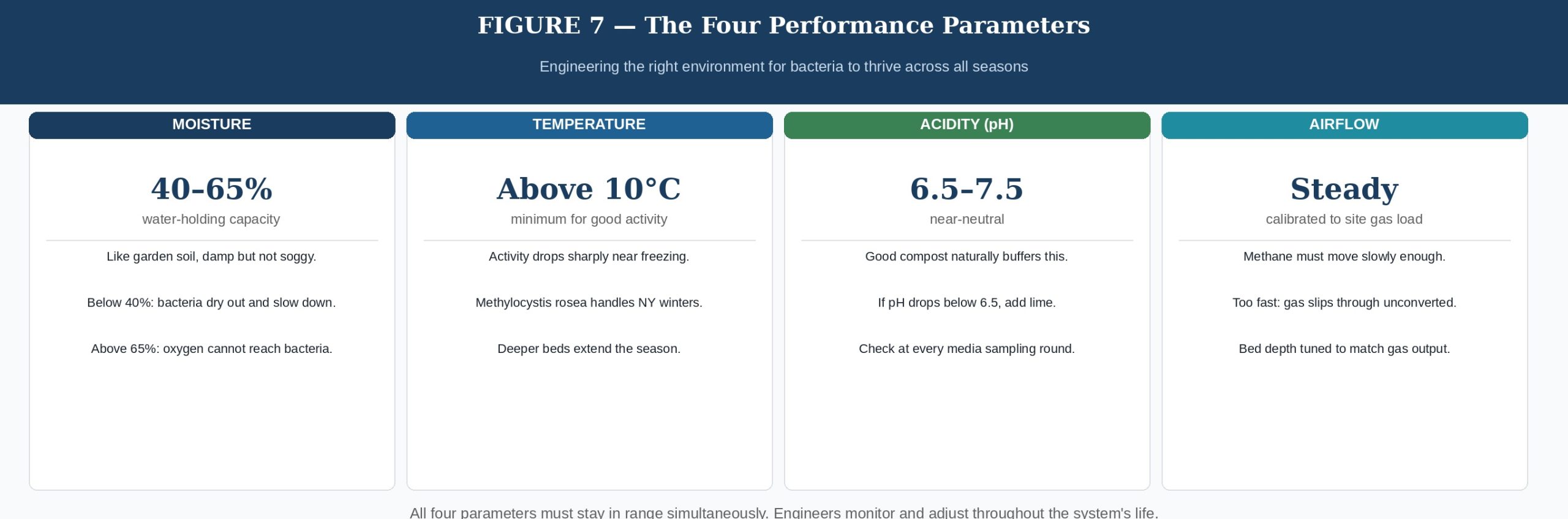
Moisture, at 40 to 65 percent water-holding capacity. Like soil in a garden, damp but not soggy. Below this range, bacteria dry out and slow down. Above it, oxygen cannot reach them, which stops the whole process. Moisture management through drainage layers, irrigation, and surface cover design is one of the primary variables operators adjust throughout the life of the system.
Temperature, above 10 degrees Celsius. Activity drops sharply near freezing. In New York winters, this requires specific design attention: deeper media beds, insulating cover layers, and strategic placement to capture solar exposure and limit wind cooling. Cold-tolerant species like Methylocystis rosea carry the load during winter months.
Acidity, or pH, between 6.5 and 7.5. Bacteria like a near-neutral environment, similar to most garden soil. Good compost naturally maintains this balance. Acidification can occur over time in systems receiving high gas loads, particularly where sulfur compounds are present. Periodic lime addition corrects this.
Airflow that is steady and even. Methane must move slowly enough through the media for bacteria to consume it fully. Too fast and it slips through unconverted. The depth and density of the bed are calibrated to match the site’s gas output rate. Uneven flow caused by compaction or waterlogging creates preferential channels where gas bypasses the active bacterial zone entirely.
The compost is not just any compost. The material the bacteria live in is called the filter media, and it is the single most critical design decision. Engineers typically use a blend of mature compost for moisture retention, nutrients, and a ready bacterial population, combined with wood chips for structure and gas permeability. Think of the compost as the ecosystem and the wood chips as the scaffolding that keeps it from collapsing over time.
Media from different suppliers can behave very differently. Particle size distribution, bulk density, initial moisture content, carbon-to-nitrogen ratio, and maturity level all influence long-term performance. At the HVRC project sites, each site’s media will be evaluated individually before design is finalized.
How do we know it is working? Engineers place measurement devices called static flux chambers in a grid pattern across the biofilter surface. These dome-shaped chambers trap any gas escaping through and allow precise measurement using portable flame ionization detectors (FID) or GEM 5000 gas analyzer. By comparing gas flux rates before and after installation, and against unmitigated reference points on the same site, teams can calculate oxidation efficiency directly.
Media samples are also taken regularly to check moisture content, pH, organic matter percentage, and bulk density. These four readings function like vital signs for the filter bed. If moisture is low, add water. If pH drops below 6.5, add lime. If bulk density has increased, the bed may need loosening or partial media replacement.
Under well-maintained conditions, biofilters consistently convert 50 to 90 percent or more of the methane passing through them. Mature systems that have been running for a full season or more tend to perform at the high end as the bacterial community grows and diversifies.
- More information on flux chamber measurement: EPA — Surface Emissions Monitoring Guidance; Flux Chambers
- More information on landfill biofilter performance: Pecorini et al. (2020) — Biofiltration at MSW Landfills, MDPI
What New York State Law Actually Requires
If you manage a closed landfill in New York, the rules are clear: gas management does not end when operations end. New York has a detailed legal framework that outlines exactly what is required and for how long.
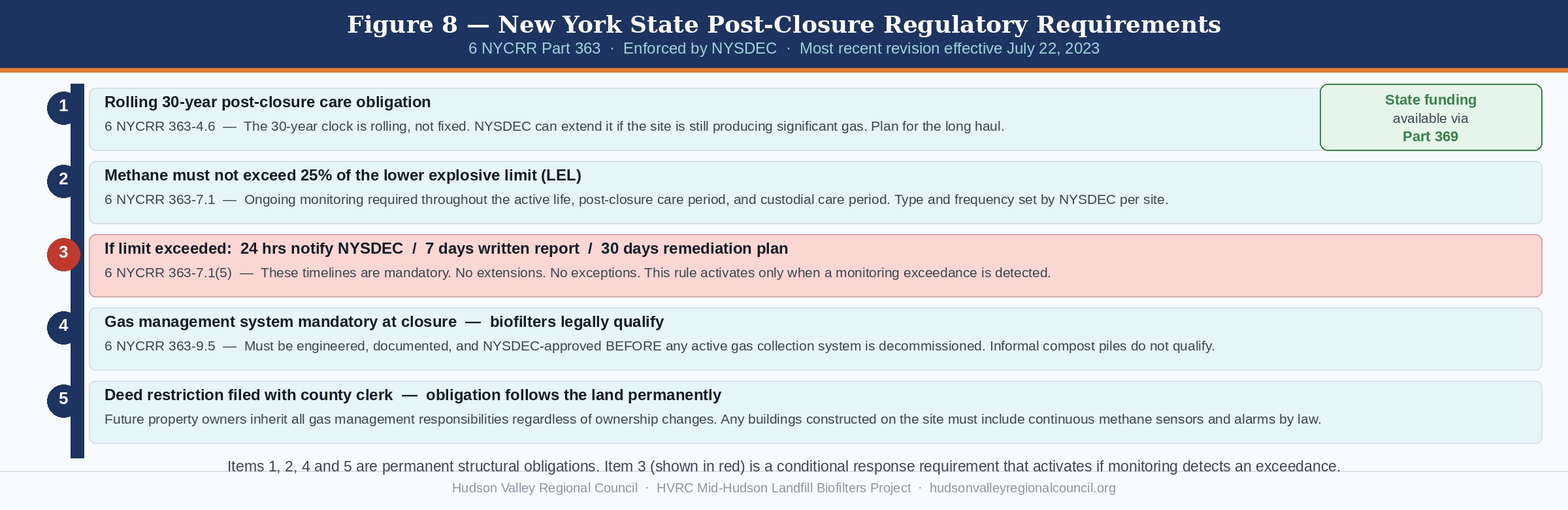
The governing law is 6 NYCRR Part 363, enforced by the New York State Department of Environmental Conservation (NYSDEC). It covers every active and closed municipal landfill in the state. The most recent revision took effect July 22, 2023.
The 30-year clock, and it can be reset. New York requires post-closure monitoring and management for at least 30 years. But unlike a fixed countdown, this is a rolling obligation. If a site is still producing significant gas at year 28 or 29, the state can extend the requirement. Operators must plan for the long haul, not just the near term. The requirement is documented in 6 NYCRR 363-4.6, which specifies that closure cost estimates must be based on this rolling 30-year post-closure care period.
Methane must stay below the explosive limit. Under 6 NYCRR 363-7.1, methane concentrations must not exceed 25 percent of the lower explosive limit (LEL) anywhere on the property boundary. An ongoing gas monitoring program, with type and frequency approved by NYSDEC based on site-specific soil and groundwater conditions, is mandatory throughout the active life, post-closure care period, and custodial care period.
Strict timelines apply if levels go too high. If methane exceeds the limit: 24 hours to notify NYSDEC, 7 days to submit a written description of corrective steps taken, and 30 days to deliver a formal remediation plan. No exceptions.
A gas management system is mandatory, and biofilters qualify. Under 6 NYCRR 363-9.5, every closed landfill must have a landfill gas management system designed and constructed in accordance with Subpart 363-6. A properly designed biofilter meets this requirement. But it must be engineered, documented, and submitted to NYSDEC for approval in advance of decommissioning any active collection system. The submission must include projected methane loading rates, expected seasonal performance, and a written monitoring protocol.
Quarterly inspections are required throughout the post-closure care period. Under 6 NYCRR 363-9.6, all facility components must be inspected quarterly and also after major storm events meeting the 24-hour five-year storm threshold, and after seismic events of sufficient intensity. Inspection records must be maintained and made available to NYSDEC.
The obligation follows the land forever. A deed restriction must be filed with the county clerk when the landfill closes, permanently recording the waste on the property and the ongoing management obligations. Future property owners inherit these responsibilities regardless of how many times the land changes hands. Any buildings constructed on the site must include continuous methane sensors that trigger audible alarms and notifications to emergency personnel.
State funding can help. Municipal operators may be eligible for financial assistance under New York’s Part 369 program to help cover the cost of landfill gas management systems, including biofilters designed to meet Part 363 requirements.
- Full regulation text: 6 NYCRR Part 363
- NYSDEC landfill program overview: NYSDEC Solid Waste Landfills
This Is Already Happening Right Here in the Hudson Valley
The best evidence that biofilters work in New York is not in a textbook. It is in the Hudson Valley, right now, across 13 communities.
The Hudson Valley Regional Council (HVRC) secured a competitive $3 million federal EPA grant to install biofilters at 13 closed landfills across the region. The project kicked off on November 1, 2024, and runs through 2029. As the Environmental Scientist leading the technical work, I can say clearly that this is not a pilot experiment or a research hypothesis. It is a full-scale, federally funded implementation program built on well-established science and carried out under New York State regulatory oversight.
The grant came from the EPA’s Climate Pollution Reduction Grant (CPRG) Implementation Program, a national competitive initiative authorized under the Inflation Reduction Act that distributed approximately $4.6 billion in implementation grants. HVRC’s application succeeded by bringing together 13 small municipalities, each of which would struggle individually to access this kind of funding, into a single regional cohort with shared resources, shared expertise, and shared outcomes.
The 13 participating communities are:
- City of Beacon, Dutchess County
- Dutchess County (landfill located in Town of Wappingers)
- Town of Amenia, Dutchess County
- Town of Bethel, Sullivan County
- Town of Gardiner, Ulster County
- Town of Hurley, Ulster County
- Town of New Paltz, Ulster County
- Town of North East, Dutchess County
- Town of Philipstown, Putnam County
- Town of Rhinebeck, Dutchess County
- Town of Wallkill, Orange County
- Town of Woodstock, Ulster County
- Village of Mamaroneck, Westchester County
Together they span Dutchess, Sullivan, Ulster, Putnam, Orange, and Westchester counties.
What we are actually doing at each site.
We begin by completing a Quality Assurance Project Plan (QAPP) and Quality Management Plan (QMP) as required by the EPA. These documents ensure that every measurement we take is scientifically valid and legally defensible. Then we visit each landfill individually to locate methane vents, map surface emissions using flux chambers, and establish a clear baseline before anything is built.
Every site is different . A landfill that accepted mainly food waste and yard debris produces a different gas profile than one that primarily took construction debris. The bacterial community that develops naturally at the surface of each site reflects those differences. Our baseline measurements capture that variability, and the biofilter design responds to it.
We will then design a custom biofilter for each location. There is no off-the-shelf kit. The size, media blend, depth, configuration, and monitoring grid are tailored specifically to each site. Once installed, we will monitor every site continuously through 2029, tracking performance across full seasonal cycles, checking bacterial health in the media, and building a data record that will be among the most detailed ever assembled for this type of system in the northeastern United States.
The 13 communities also meet regularly as a cohort to compare notes, share what is working, and solve problems together. What one community learns at their site helps all the others. It turns 13 individual projects into a regional knowledge base.
As a bonus, each site can also receive a study exploring whether the closed landfill cap could host solar panels and battery storage, creating a second life for the land as a renewable energy site. Native pollinator plantings are also being installed at participating sites, turning former waste areas into habitats for bees, butterflies, and other pollinators.
- HVRC project page: HVRC Mid-Hudson Landfill Biofilters Project
- EPA CPRG program: EPA Climate Pollution Reduction Grants
- Quick Read: 5 Ways to Cut Landfill Methane Pollution: How Local Governments Can Lead
Closing Remarks
When most people think about what happens to a landfill after it closes, they imagine the story is over. In reality, the story is still being written underground, for decades, whether we pay attention or not.
Biofilters are a way of paying attention: deliberately, affordably, and with the grain of nature rather than against it. The bacteria that make them work, the Methylocystis, the Methylosinus, the Methylocaldum, the Methylobacter and their relatives, have been on this planet far longer than we have. They do not need us to invent anything new. They just need the right conditions.
Our job as engineers and environmental scientists is to provide those conditions, monitor carefully, and then step back and let biology do what it has always done. That is exactly what we are doing under the HVRC Mid-Hudson Landfill Biofilters Project.
Sources: HVRC Mid-Hudson Landfill Biofilters Project · EPA LMOP · 6 NYCRR Part 363, New York State · EPA CPRG Implementation Program · Pecorini, Rossi and Iannelli (2020), MDPI · Duan, O’Connor, Hansen, Scheutz and Kjeldsen (2020), Elsevier · SCS Engineers Report to California IWMB (2008)