
Stormwater Information Hub
The purpose of the Stormwater Information Hub is to provide resources for MS4 operators to use to meet the requirements of the MS4 permit. The resources available are provided below and are free to use upon request.
While educational materials are developed to meet the needs of the MS4 permit, stormwater concerns exist outside of MS4 boundaries. Non-MS4 municipalities, municipal volunteers, and residents are also welcome to request use of the resources on this page.
Stormwater: What's the Issue?

Photo from USEPA
Stormwater occurs when precipitation, such as rain or snow melt, flows over the ground instead of soaking into it. Typically, this occurs in areas covered with impervious surfaces (e.g. rooftops or paved areas) or in areas soil is unable to rapidly absorb water (e.g. compacted, bare soil and sloped areas). Stormwater will flow towards one of three nearby locations: pervious surfaces (lawns or grassy areas), waterbodies, or storm drains. Storm drains are present on impervious surfaces to help manage stormwater and assist precipitation in reentering the environment. They direct stormwater directly into local waterways without any treatment. The severity and intensity of stormwater depends on local precipitation patterns, geography, and land use.
As stormwater flows over the ground it collects and transports any pollutants that may be on the surface. Common pollutants carried in stormwater include:
- Nutrients such as phosphorus and nitrogen from septic and sewer system leakage, fertilizer application, and animal waste
- Bacteria from animal waste and damaged/improper septic and sewer systems
- Sediment from construction activities
- Salt from deicing application to impervious surfaces during winter months
- Trash and other debris from illicit dumping
- Oil and grease from improperly stored hazardous materials, vehicle maintenance and illicit dumping
- Metals and detergents from vehicle washing and illicit dumping
Stormwater, and any pollutants it may carry, flows over impervious surfaces and directly into a waterbody or storm drain. Because of this, there is no opportunity for soil, plants, or wastewater treatment facilities to filter the pollutants. So, any pollutant that is picked up by stormwater or dumped down a drain will go directly into the environment which threatens our lakes, rivers, groundwater, and drinking water. Pollutants entering a waterbody degrade water quality, damage habitat, and threaten aquatic and mammalian heath. They make once pristine waterbodies unsafe for drinking and recreation.
Educational Content Templates
HVRC contracted with Cornell Cooperative Extension Rockland County to obtain stormwater educational content for municipal use. HVRC updated the content to reach a wider audience and added additional pieces to meet the requirements of the MS4 general permit. While the templates were made with the MS4 general permit in mind, they are not limited to use for the permit requirements.
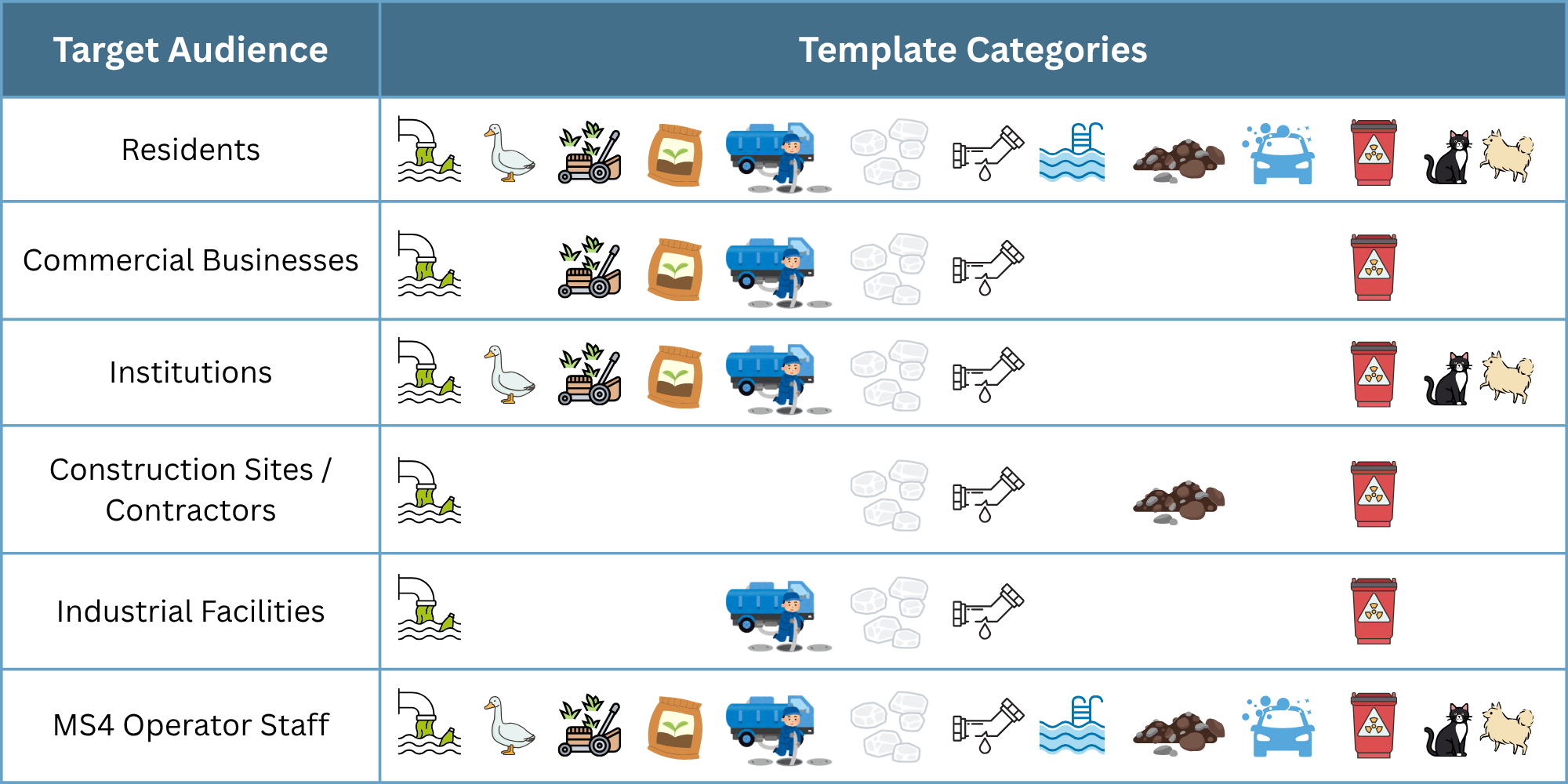
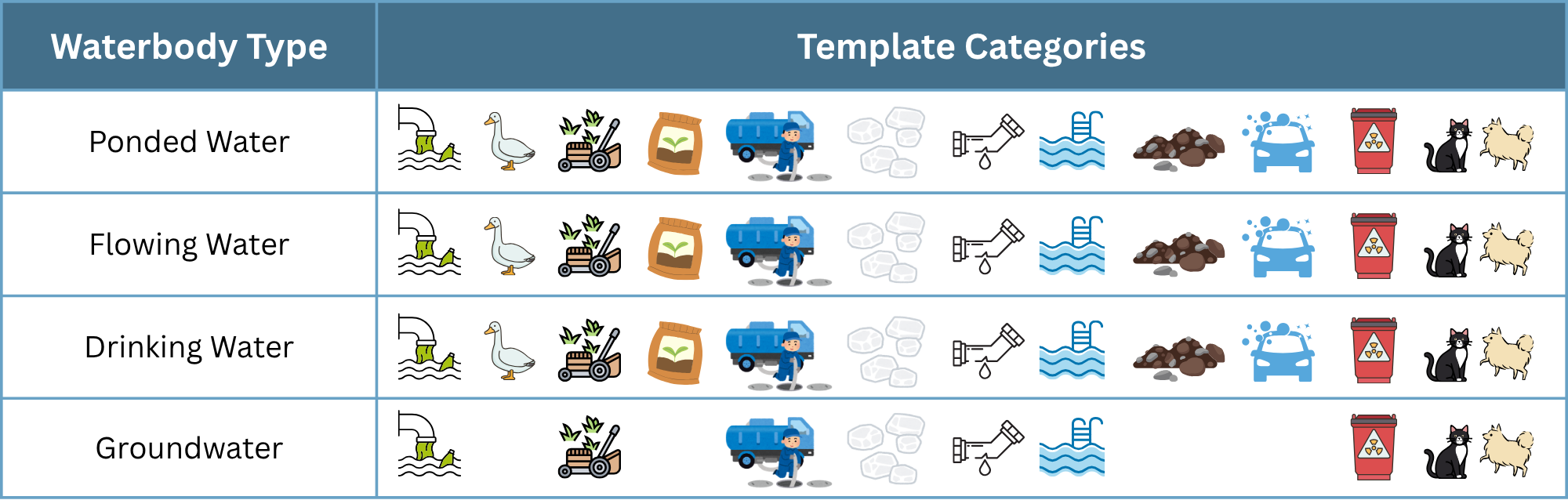
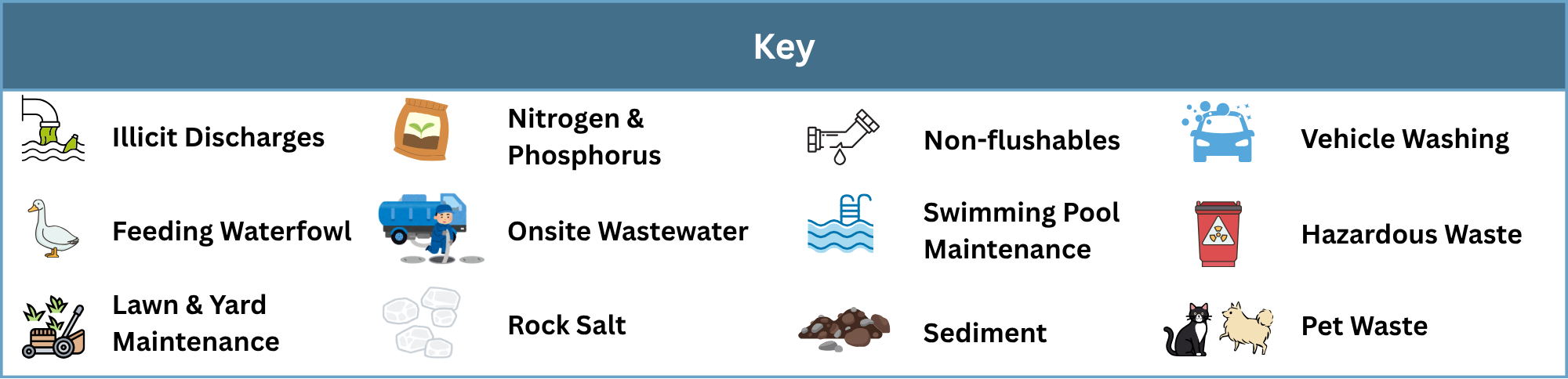
The templates are organized into 12 categories associated with pollutant causing activities. Template range from infographics with minimal text to text heavy informational flyers. They are presented as square graphics that are easy to share on social media, paste into a newsletter, or to print and post in buildings.
The table to the right shares a breakdown of the different pollutant categories and where you can find information for specific target audiences and waterbody types.
How to Use
HVRC’s templates are available for use and personalization upon request to Water Resources Coordinator Lauren Bunce. Each template can be updated with your own photos, text, and municipal contact information, if desired. A request form is available for you to complete.
Request Form

The Request Form can be used to identify which content pieces you are interested in, if there is any text you would like updated, and if there are any photos you would like changed. If you would like to update the photos, please fill out the form and email your photos to Water Resources Coordinator Lauren Bunce.
The form will notify HVRC upon submission and requests will be filled within 5 business days.
Please Note: Due to the nature of our organization, HVRC is only able to provide personalization support to entities within the Mid-Hudson Region. Any requests received from outside the Mid-Hudson Region will receive a link to a Canva file for them to personalize themself.
Available Templates
Illicit Discharges
Feeding Waterfowl


An illicit discharge, as defined by the NYS DEC MS4 General Permit, is any discharge into an MS4 that is not entirely composted of stormwater. MS4s direct precipitation to local waterways without treatment. So, any material dumped into the system will enter the environment.


Where waterfowl congregate, excess droppings concentrate and elevate nutrient concentrations in the water. This results in water quality problems such as algal blooms and elevated E-coli levels. Learn more at NYS DEC's Stop Feeding Waterfowl.
Lawn & Yard Maintenance
Nitrogen & Phosphorus



Proper lawn maintenance can help your lawn grow thicker without an environmental impact. Learn what adjustments to make to your lawn to avoid introducing excess phosphorus and nitrogen into the environment at Cornell University's Lawn Care: The Easiest Steps to an Attractive Environmental Asset.

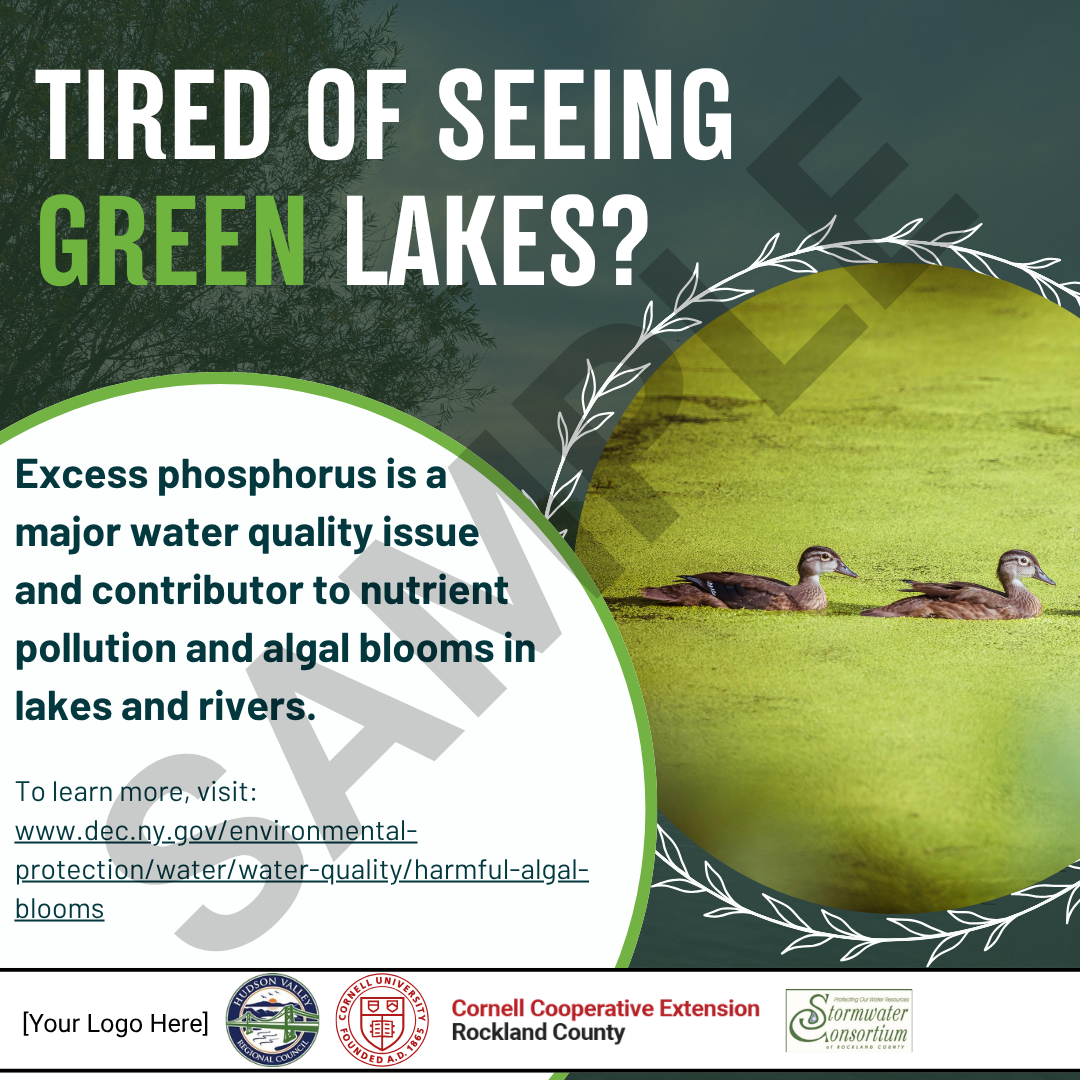


Excess nutrients, such as nitrogen and phosphorus, can cause toxin producing algae to bloom in water, referred to as a harmful algal bloom (HAB). Contact with these toxins through ingestion, skin contact, or inhalation is a health risk to people and animals. Learn more at NYS DEC's Harmful Algal Blooms.
Onsite Wastewater
Rock Salt


Septic systems treat household wastewater before filtering it to the soil. This filtered water helps replenish groundwater, but it can also contaminate waterbodies with chemicals, nutrients, or pathogens if the septic system is not working properly. Learn more at US EPA's Septic System Impacts on Water Sources.


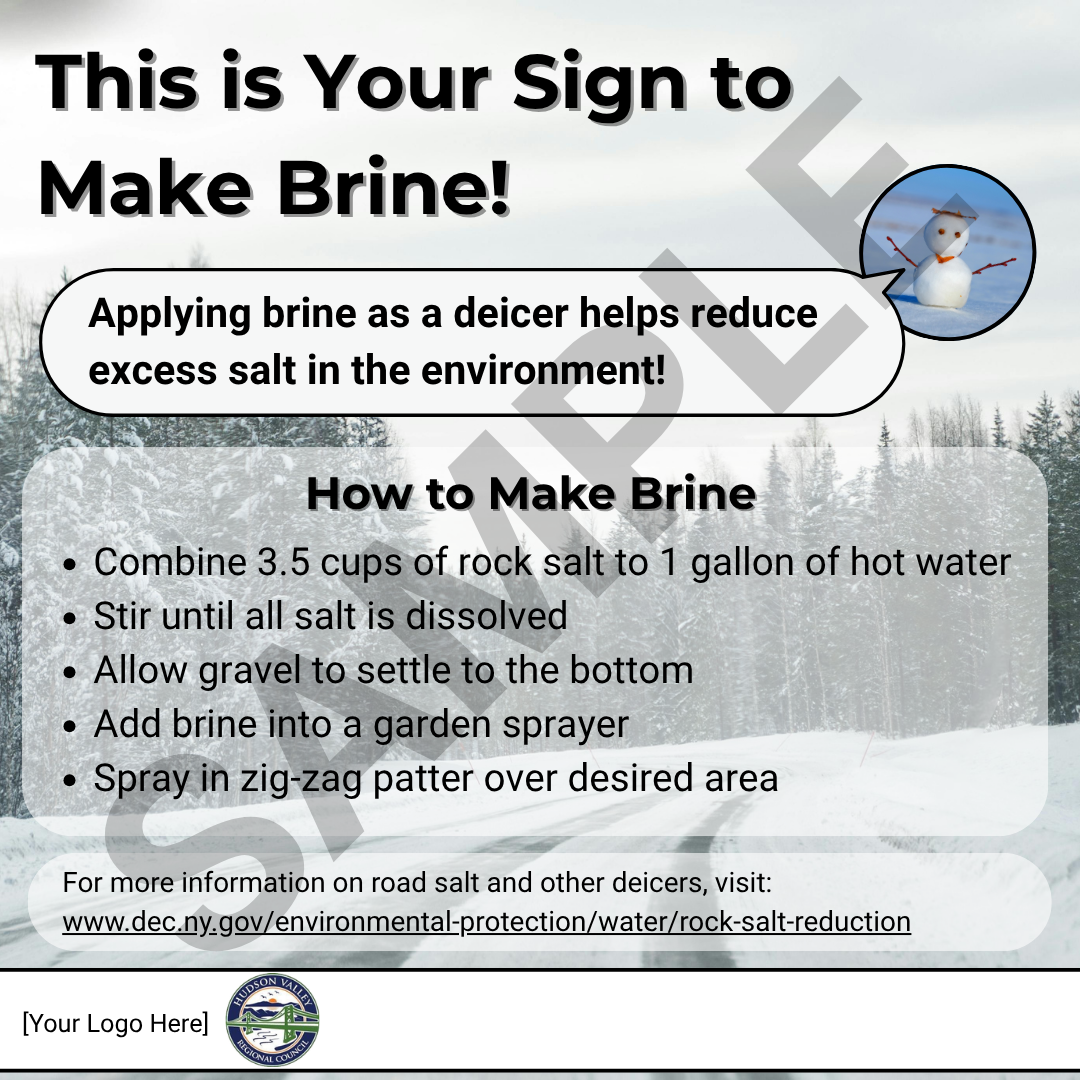

Rock salt is used to keep hard surfaces clear of snow and ice. Excess rock salt usage negatively impacts surface water and groundwater and, subsequently, public health. Learn more at NYS DEC's Rock Salt Reduction.
Non-flushables
Swimming Pool Maintenance


Commonly flushed items can damage sewer systems and wastewater treatment equipment, even if they are labeled as flushable. Damaged systems lead to sewage leakage into the environment. Learn more at NYS DEC's Sewage Right to Know.


If pool water treated with chemicals, such as chlorine, bromine, and salt, is discharged to a waterbody it can harm water quality. Ensure chemically treated water is neutralized before discharging to the environment. Learn more at US EPA's Educating Residents on Safely Discharging Chemically Treated Water.
Sediment
Vehicle Washing


Loose sediment can be picked up by stormwater and brought to nearby storm drains or waterbodies. Sediment can carry nutrients and pesticides and, once in the water, clog stream channels and increase turbidity. Learn more at USDA's Sediment fact sheet.


Detergent-rich water containing metals and oil run off cars during washes. To keep this water from entering a storm drain, wash cars on the lawn or use a commercial car wash. Learn more at US EPA's Vehicle Maintenance and Washing.
Hazardous Waste
Pet Waste


Improperly disposing of household hazardous waste by pouring it down the drain, on the ground, into storm drains, or, in some cases, in regular trash can pollute the environment and threaten human health. See the NYS DEC's Household Hazardous Waste website for more.


Pet waste left on the ground can be picked up by stormwater and carried to a storm drain or a nearby waterbody introducing nutrients and bacteria to the water. These contaminants promote algae growth and impact environmental and human health. Learn more at US EPA's Pet Waste Management.
Contact Information

Lauren Bunce, Senior Water Resources Coordinator
NYS DEC 604(b) Water Quality Planning Program
Email: lbunce@hudsonvalleyrc.org
Phone: 845-564-4075